Mostrando entradas con la etiqueta células madre fetales. Mostrar todas las entradas

sábado, 18 de octubre de 2014

Dopamine cell therapy for Parkinson's shows promise

Fuente: http://medicalxpress.com/news/2014-10-dopamine-cell-therapy-parkinson.html


Just one shot of dopamine cells derived from stem cells could be enough to reverse many of the features of Parkinson's disease for decades – and the barriers to developing such a treatment are finally being overcome.


Professor Roger Barker has a dream: by the time he retires in 15 years, he would like to see stem cell transplants for Parkinson's disease available on the NHS.


Fifteen years may seem like plenty of time to realise this dream, but there are so many contingencies that even he admits this may be optimistic. "It assumes that all our clinical trials go smoothly, that industry takes up the technology – and that 'stem cell tourism' doesn't set us back," he said.


It's not difficult to understand why people resort to stem cell tourism – going abroad, usually to countries such as India and China, to receive private, unregulated stem cell therapies (however experimental) to treat incurable conditions such as Parkinson's or multiple sclerosis. There has been much hype surrounding stem cells and, with nothing to lose, isn't it worth at least trying one of these treatments? The trouble is that they are based on very limited – if any – evidence and have the potential "to go pear-shaped", said Barker. This could damage public – and, more importantly, regulators' – confidence in the field and lead to inappropriate restrictions on legitimate research.


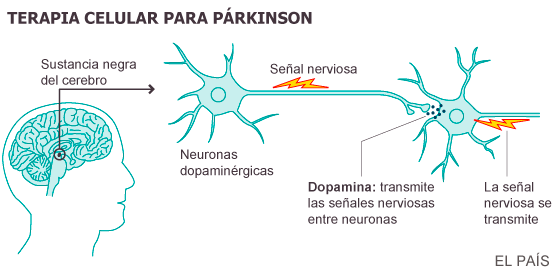
The idea of cell transplants to treat Parkinson's is not new. One of the key characteristics of the disease, which affects around one in 800 people by the time they are elderly, is the death of dopamine-producing cells in the brain. Finding a way to replace these cells could, in theory, lead to dramatic improvements in the patient's health.


An adult typically has around half a million dopamine cells in the substantia nigra on each side of the brain. When half of these cells have died, the patient will begin showing symptoms, which include a resting tremor, slowness of movement and rigidity. "One of the reasons Parkinson's disease is so attractive for cell therapies," explained Barker, "is that it is a tractable problem. If we can get just 100,000 proper nigral dopamine cells in there, it should make a difference."


Ever since the 1980s, scientists have been trialling ways of replacing dopamine cells with cells taken from aborted fetuses – a practice which, aside from ethical concerns, is not practical on a scale needed to treat the hundreds of thousands of patients in the UK alone.


The trials had mixed success. In some, patients continued to see improvements over 15 years; however, in others, the treatment not only failed, but patients suffered side effects. In part, this was due to an inconsistency in protocols, for example the age of participants, the clinical techniques used for cell delivery and the number of cells transplanted.


Now, with funding from the European Union, Barker and collaborators in Europe have developed a protocol that is more likely to provide safe, consistent and clinically effective benefits for patients. He is leading a trial in Europe to use fetal cells to treat patients, with the aim of "putting cell therapies for Parkinson's disease back on the map."


If the trial is successful, by 2018 the researchers hope to begin trialling the use of dopamine cells derived from embryonic stem cells through a new collaboration with teams across Europe, the USA and Japan. (The collaborators in Japan hope to conduct a similar trial using induced pluripotent stem cells – the patients' own skin cells, reprogrammed to become stem cells.)


The beauty of using stem cells is that they can be programmed to become almost any type of cell within the body. The risk, of course, is that they become the wrong kind of cell or 'run away with themselves' to become cancerous. Earlier this year in Lisbon, an experimental stem cell treatment – part of an approved trial to cure paralysis – reportedly led to a paraplegic woman growing a nasal tumour on her back. However, Barker is confident that new protocols have all but eliminated safety concerns – though this risk may be very real in cases of stem cell tourism.


It has still been a challenge to programme the stem cells to become nigral dopamine cells. "You take stem cells and programme them to become 'neural precursor cells'. These cells make brain; some will turn into dopamine cells and others will want to become forebrain – but if you already have a forebrain, growing another one is not going to help you! Fortunately, we've found a way round this to allow us to commit the precursor cells to become the right dopamine cells without the other cells appearing after grafting."


Pre-clinical studies in mice have shown success in treating Parkinson's disease with dopamine cells derived from stem cells, but the mice are observed only over a matter of months: Parkinson's, by contrast, is a disease that progresses over decades. Indeed, postmortems of some of the people who had previously received fetal cell transplants found evidence of the disease in some of the cells in the graft as though the protein involved in Parkinson's had caused disease in the transplant. "If that's the case, then even with stem cell therapies we could start to see pathology. But even if that is true, we know it will be decades before we start to see an effect and so this should not prevent them being adopted for treating patients."


"Of course, just because we can do something doesn't necessarily mean we should," added Barker. Treatments already exist for Parkinson's disease. The drug L-dopa can replace lost dopamine and reverse symptoms – but medication needs to be taken regularly, can cause side effects and eventually becomes relatively ineffective. Deep brain stimulation – electrodes implanted into the brain – can likewise prevent tremors and reduce some of the motor features experienced by Parkinson's sufferers, but patients need to carry around battery packs under their skin. Cell therapies, on the other hand, are relatively straightforward to administer, injected through a small hole in the skull, and just one shot should last decades.


Even so, Barker is realistic about what stem cell therapies can achieve. "They are likely to be no more effective than existing treatments. We certainly won't be curing anyone." He is also aware that to produce cells on a scale large enough for widespread use, the technology will need to be picked up by industry. "And once this becomes a commercial treatment, price may become the biggest issue."


lunes, 30 de junio de 2014

'Master switch' for myelination in human brain stem cells is identified

Fuente: http://www.sciencecodex.com/master_switch_for_myelination_in_human_brain_stem_cells_is_identified-136658


Scientists at the University at Buffalo have identified the single transcription factor or "master switch" that initiates the critical myelination process in the brain. The research will be published online in Proceedings of the National Academy of Sciences (PNAS).


The identification of this factor, SOX10, in human brain cells, brings researchers closer to the goal of treating multiple sclerosis (MS) by transplanting into patients the brain cells that make myelin.

"Now that we have identified SOX10 as an initiator of myelination, we can work on developing a viral or pharmaceutical approach to inducing it in MS patients," says Fraser Sim, PhD, senior author on the paper and assistant professor in the UB Department of Pharmacology and Toxicology in the School of Medicine and Biomedical Sciences.

"If we could create a small molecule drug that would switch on SOX10, that would be therapeutically important," he adds.

Stem cell therapy is seen as having dramatic potential for treating MS, but there are key obstacles, especially the length of time it takes for progenitor cells to turn into oligodendrocytes, the brain's myelin-making cells.

Using currently available methods, Sim explains, it can take as long as a year to generate a sufficient number of human oligodendrocyte cells to treat a single MS patient.

That's partly because there are so many steps: the skin or blood cell must be turned into induced pluripotent stem cells, which can differentiate into any other type of cell and from which neural progenitor cells can be produced. Those progenitor cells then must undergo differentiation to oligodendrocyte progenitors that are capable of ultimately producing the oligodendrocytes.

"Ideally, we'd like to get directly to oligodendrocyte progenitors," says Sim. "The new results are a stepping stone to the overall goal of being able to take a patient's skin cells or blood cells and create from them oligodendrocyte progenitors," he says.

Using fetal (not embryonic) brain stem cells, the UB researchers searched for transcription factors that are absent in neural progenitor cells and switched on in oligodendrocyte progenitor cells.


While neural progenitor cells are capable of producing myelin, they do so very poorly and can cause undesirable outcomes in patients, so the only candidate for transplantation is the oligodendrocyte progenitor.

"The ideal cell to transplant is the oligodendrocyte progenitor cell," Sim says. "The question was, could we use one of these transcription factors to turn the neural progenitor cell into an oligodendrocyte progenitor cell?"

To find out, they looked at different characteristics, such as mRNA expression, protein and whole gene expression and functional studies.

"We narrowed it down to a short list of 10 transcription factors that were made exclusively by oligodendrocyte progenitor cells," says Sim.

"Among all 10 factors that we studied, only SOX10 was able to make the switch from neural progenitor to oligodendrocyte progenitor cell," says Sim.

In addition, the UB researchers found that SOX10 could expedite the transformation from oligodendrocyte progenitor cell to differentiation as an oligodendrocyte, the myelin-producing cell and the ultimate treatment goal for MS.

"SOX10 facilitates both steps," says Sim.

That's tantalizing, he says, because one of the biggest problems with MS is that cells get stuck in the step between the oligodendrocyte progenitor cell and the oligodendrocyte.

"In MS, first the immune system attacks the brain, but the brain is unable to repair itself effectively," explains Sim. "If we could boost the regeneration step by facilitating formation of oligodendrocytes from progenitor cells, then we might be able to keep patients in the relapsing remitting stage of MS, a far less burdensome stage of disease than the later, progressive stage."

Sim is also an investigator with other scientists at UB and the University of Rochester on the $12.1 million New York State Stem Cell Science award led by SUNY Upstate Medical Center. The research will test the safety and effectiveness of implanting stem cells that can reproduce myelin into the central nervous system of MS patients.


sábado, 14 de junio de 2014

El trasplante de células fetales alivia los síntomas motores del parkinson

Fuente: http://sociedad.elpais.com/sociedad/2014/06/05/actualidad/1401981364_074028.html


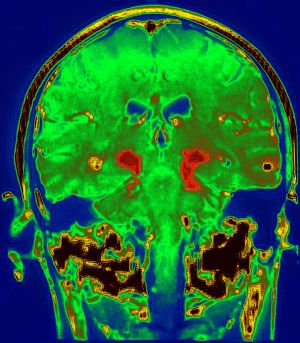
Cerebro de una persona con parkinson. 


El trasplante de células fetales en el cerebro de personas con parkinson ha conseguido mejorar los síntomas motores (temblores, rigidez) de 25 voluntarios, según los primeros datos de un estudio dirigido por Ole Isacson, del hospital McLean (un centro asociado a Harvard), que se publican en la revista Cell Reports.


“Los trasplantes revirtieron los desórdenes motores del parkinson y los pacientes llegaron a un nivel donde no necesitaron ninguna medicación para su enfermedad”, ha afirmado Isacson.


El ensayo comenzó hace 14 años y en él han participado 25 voluntarios. En todos ellos los resultados en cuanto a sus síntomas son similares, indican los autores del trabajo. Pero –y este es el motivo de que se publiquen ahora los resultados- ahora los investigadores han podido observar los cerebros de cinco de esos voluntarios que han fallecido, y se han encontrado con que las células trasplantadas seguían en perfecto estado. Esto supone que no se han visto afectadas por el proceso neurodegenerativo del cerebro de los enfermos. Ninguno de los fallecidos murió como consecuencia del parkinson. “Las hemos visto y parecen muy sanas”, ha dicho el investigador.


“Hemos estudiado el cerebro postmortem en profundidad y con gran detalle. Pero, además, también hemos visto la recuperación de la funcionalidad del resto de pacientes que están vivos y tenemos pruebas positivas por medio de imágenes PET [tomografía por emisión de positrones] de que los trasplantes están funcionando”, explica Isacson.


La clave del estudio es que se han utilizado células dopaminérgicas obtenidas de fetos. Es decir, suplen la función de liberar la dopamina (un neurotransmisor) que se deteriora en las neuronas de los enfermos por razones que aún no se conocen. Más en detalle, se ha visto que tampoco hay deterioro en las mitocondrias, unos orgánulos celulares cuya función es actuar como centrales energéticas de las células, y que se ha visto en otros estudios que están afectadas en personas con parkinson.


El ensayo reabre la posibilidad de tratamientos biológicos para esta enfermedad, la segunda de las que afectan al cerebro tras el alzheimer (solo en España se calcula que hay entre 100.000 y 150.000 afectados). Las células trasplantadas suplen otros tratamientos, como los implantes o la medicación que proporciona dopamina (la famosa levodopa).


Además, Isacson cree que este trabajo, que comenzó mucho antes del auge de las células madre, reabre las posibilidades de aplicar este material biológico a la enfermedad. Ya ha habido algunos ensayos, pero los primeros resultados fueron descorazonadores porque los afectados desarrollaron tumores. El investigador cree que la técnica que él utiliza, con unas microinyecciones de las células fetales en lugar de otros implantes de porciones mayores, puede ser la causa de que su intento haya funcionado. Miquel Vila, jefe de Enfermedades Neurológicas del Instituto de Investigación de Vall d'Hebrón y miembro del Centro de Investigación Biomédica en Red de Enfermedades Neurodegenerativa (Ciberned) valora sobre todo dos aspectos del trabajo. “En anteriores estudios se había visto que las células implantadas se contagiaban del parkinson. Esto se veía porque se reproducían en su interior los acúmulos de una proteína característica, las alfasinucleína, que forman los cuerpos de Lewy. Por lo que dicen los autores, esto aquí no se ha producido”.


Esto es importante, porque —por el motivo que sea— se ha evitado un inconveniente de estos trasplantes: que después de lo complicado del proceso, perdían efectividad con el tiempo. “Se trataba de un proceso similar que se ha comparado al de los priones de las vacas locas, en el que una proteína se contagia a células sanas”, explica el científico.


Además, en ensayos previos este tipo de terapias mostraban otra problema: que, al igual que sucede con la levodopa, el medicamento más común para tratar a personas con parkinson, tenían un efecto secundario adverso, como si fuera un rebote, y se pasaba de que los pacientes tenían rigidez a que mostraban movimientos incontrolados (lo que se llaman discinesias). “Con la medicación eso se soluciona regulándola, pero con las células eso no se puede hacer”, dice Vila. Parece que ahora no ha sido así, añade el científico.


El médico también señala otro aspecto a tener en cuenta: "En el parkinson también existe la afectación de otras vías neuronales no dopaminérgicas y que causan alteraciones importantes no motoras en estos pacientes (depresión, demencia, trastornos del sueño)", que no se pueden tratar así.


Con todas las cautelas, Vila se muestra optimista: “Estos dos aspectos dan un nuevo impulso a las terapias biológicas”, concluye el investigador.

jueves, 15 de mayo de 2014

Células del cerebro fetal para combatir las secuelas del ictus

Fuente: http://www.abc.es/salud/noticias/20140512/abci-celulas-fetales-contra-ictus-201405101638.html


En el filo de lo éticamente censurable y la necesidad de dar una solución a los estragos de los accidentes cerebrovasculares, la compañía británica ReNeuron ha presentado los resultados del primer ensayo clínico con células madre diseñado para combatir las secuelas del ictus.

Un año después del tratamiento, los primeros once pacientes tratados han mejorado de su discapacidad, lo que demostraría que la terapia podría reparar los cerebros dañados tras sufrir un infarto o una hemorragia cerebral.

Los resultados se han presentado en el congreso europeo de ictus celebrado en Niza (Francia). El éxito anima a seguir adelante con el ensayo y a incorporar nuevas víctimas de ictus, pero también plantea recelos de tipo ético. Las células madre utilizadas en la terapia no procedían de los propios pacientes, como sugieren otras aproximaciones de la medicina regenerativa, sino de fetos humanos abortados. Aunque no es la primera vez que se recurre a células fetales, se han utilizado contra el párkinson y otras patologías graves, su utilización nunca está exenta de polémica.

A los once enfermos de este ensayo se les inyectaron directamente en su cerebro células progenitoras neurales que fueron aisladas y extraídas del córtex cerebral de fetos desechados.


Los tratamientos se hicieron en el Hospital General de Glasgow, en Escocia, dentro del ensayo clínico PISCES (Investigación Piloto con Células Madre en el Ictus, en su acrónimo en inglés). Cuando comenzaron las pruebas, se enroló a enfermos que habían sufrido el infarto o la hemorragia cerebral en un espacio de tiempo no superior a seis meses. En todos los casos los síntomas se habían estabilizado, de manera que era más fácil relacionar cualquier avance o retroceso del paciente con el tratamiento.

Un año después de la infusión de células, las mejoras en los enfermos tratados son apreciables: algunos pueden mover su extremidades y realizan tareas diarias que antes de la terapia eran incapaces de realizar. Las mejoras se midieron con las escalas utilizadas para comprobar la recuperación.

En los test utilizados para medir la mejora de la calidad de vida, puntuados de 0 a 100, los pacientes tenían una media de 45. Un año después del tratamiento lograron subir en 18 puntos esa media.

La mejora no ha sido inmediata. A los tres meses de la inyección la recuperación era menor que al año, lo que sugiere que podría avanzar más.


Tras el éxito de esta primera fase, la compañía ReNeuron ha empezado ya a reclutar a un mayor número de pacientes para un ensayo clínico más amplio. En esta ocasión, las células se probarán en 41 enfermos más recientes, que hayan sufrido un ictus en los últimos dos-tres meses.

La idea es comprobar si las células madre son más eficaces cuando se aplican precozmente. Los resultados para esta segunda fase terminarán a finales de 2015 y permitirán saber si la terapia celular es segura más allá de esta prueba piloto con un número reducido de pacientes.


La teoría de los científicos de ReNeuron es que estas células madre alivian las secuelas del ictus al reducir la inflamación cerebral. También facilitan la liberación de factores de crecimiento que ayudan a las células cerebrales a recolonizar las áreas dañadas.

La terapia celular es la última esperanza en el tratamiento del ictus, también llamados accidentes cerebrovasculares. Salvo la rehabilitación física y cognitiva de estos pacientes, poco se puede hacer para ayudar a recuperar las capacidades perdidas.